
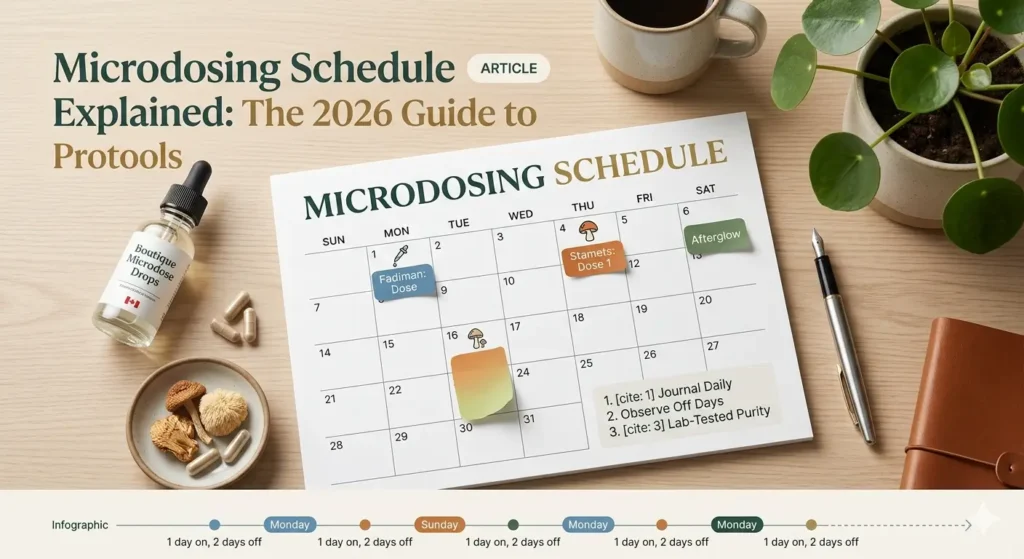

A microdosing schedule is a structured routine of taking sub-perceptual amounts of a substance—like LSD or psilocybin—followed by specific “reset” days. Popular methods like the Fadiman Protocol and Stamets Stack help prevent chemical tolerance while maximizing long-term benefits for focus, creativity, and mood.
Why a Microdosing Schedule is Essential for Success
Microdosing is not about the immediate “high”; it is about the long-term cumulative effects on the brain’s neuroplasticity. Without a strict schedule, the body quickly builds a tolerance, meaning you would need increasingly larger doses to achieve the same results. A professional routine ensures your receptors remain sensitive and the practice remains sustainable.
The Science of Tolerance and Resetting
When you microdose, you are engaging specific serotonin receptors. Constant stimulation leads to “downregulation,” where the brain becomes less responsive. By implementing “off days,” you allow your system to return to baseline, ensuring that each dose remains effective.
The Fadiman Protocol: The Beginner’s Gold Standard
Developed by Dr. James Fadiman, this is the most widely recognized microdosing schedule in the world. It is particularly effective for those using liquid microdose drops because of the long-lasting nature of the substance.
How the Fadiman Cycle Works
The Fadiman Protocol operates on a three-day cycle:
- Day 1: Dose Day. Take your microdose in the morning.
- Day 2: Transition Day. Observe the “afterglow” effects (lingering focus and mood lift).
- Day 3: Normal Day. A full rest day to reset your tolerance.
- Day 4: Cycle Repeats.
Best Practices for the Fadiman Method
To get the most out of this cycle, it is recommended to keep a journal. Record your sleep quality, energy levels, and social interactions on both “on” and “off” days to see the full impact of the routine.
The Stamets Stack: Focused on Neuroplasticity
Named after mycologist Paul Stamets, this schedule is often preferred by those using mushroom-based capsules. It focuses on a “work week” style of dosing.
The 4-Day On, 3-Day Off Routine
The Stamets Stack typically involves:
- 4 Consecutive Days: Taking a microdose once per day.
- 3 Consecutive Days: Complete rest to allow the brain to integrate the changes.
The Importance of Niacin and Lion’s Mane
The “Stack” usually includes Lion’s Mane mushroom and Niacin (Vitamin B3). Niacin acts as a vasodilator, helping the beneficial compounds reach the furthest tips of the nervous system, potentially enhancing the neurogenic benefits of the microdose.
Choosing the Right Substance for Your Schedule
While the schedules above can be used for various substances, the choice of “medicine” often dictates the experience.
Why Choose Liquid Microdose Drops?
For many in the Canadian boutique market, best LSD microdose drops Canada are the preferred choice for the Fadiman Protocol. Because liquid allows for 1mcg precision, you can fine-tune your dose to ensure it remains sub-perceptual while providing 10–12 hours of steady cognitive enhancement.
Safety First: Harm Reduction and E-E-A-T
Microdosing should always be approached with a safety-first mindset. Only use products that have undergone third-party lab testing to ensure purity and accurate concentration.
Common Microdosing Mistakes to Avoid
- Dosing Too High: If you feel “trippy,” the dose is too high. A microdose should be “sub-perceptual.”
- Lack of Consistency: Jumping between different schedules makes it impossible to track progress.
- Ignoring the “Off” Days: The rest days are just as important as the dose days for brain health.
FAQ: Frequently Asked Questions About Microdosing
How long does a microdose last?
A microdose of LSD typically lasts between 10–12 hours, while psilocybin microdoses generally last 4–6 hours. This is why morning dosing is highly recommended.
Can I microdose every day?
Daily dosing is not recommended. It leads to rapid tolerance buildup and can lead to emotional exhaustion. Following a structured microdose protocol is essential for long-term health.
Where can I learn more about the effects?
For a deeper dive into common questions regarding legality, safety, and testing, visit our comprehensive LSD FAQ.