
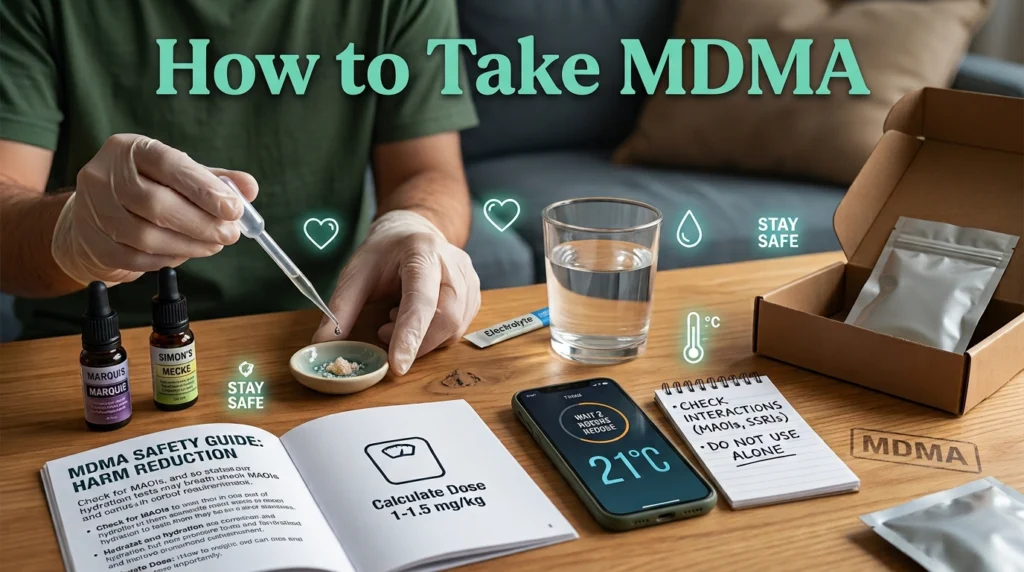

Taking MDMA more safely means starting with a low dose, avoiding combinations with MAOIs or other stimulants, staying hydrated without overdoing water intake, keeping cool, and not using it frequently. These practical steps significantly reduce the most common risks, including overheating, dangerous drug interactions, and serotonin-related complications.
What Is MDMA and How Does It Work
MDMA (3,4-methylenedioxymethamphetamine) is a synthetic substance that triggers a large release of serotonin, dopamine, and norepinephrine in the brain. This produces feelings of emotional closeness, increased energy, and heightened sensory perception. It is commonly referred to as Molly in crystal or powder form, and Ecstasy when pressed into pills.
Pills sold as ecstasy frequently contain adulterants or no MDMA at all. Crystal or powder MDMA varies widely in purity. Testing what you have before use is one of the most practical harm reduction steps available.
Before You Take MDMA: Key Checks
Check Your Medications
The most critical step before taking MDMA is reviewing any medications you currently take. MDMA combined with MAOIs (monoamine oxidase inhibitors) can cause rapid, severe, and potentially fatal serotonin syndrome. MAOIs remain active in your system for up to two weeks after stopping, so the danger window extends well beyond your last dose.
SSRIs and SNRIs interact differently. They tend to reduce MDMA’s effects rather than amplify them dangerously, but the combination is still not risk-free and is best avoided without professional guidance.
Know What You Are Taking
Reagent test kits (Marquis, Simon’s, Mecke) can help confirm whether a substance contains MDMA. No test kit guarantees purity or rules out all adulterants, but testing is significantly better than not testing. If a drug checking service is available in your area, using it provides more detailed information. For those sourcing MDMA in Canada, lab-tested products reduce one layer of that uncertainty.
Consider Your Physical and Mental State
MDMA places real demands on the cardiovascular system. People with heart conditions, high blood pressure, liver problems, or a personal or family history of serious mental health conditions should be aware of these added risks. The substance can intensify existing anxiety and, in some cases, trigger or worsen underlying conditions.
Dosage and Timing
A widely used harm reduction guideline is to calculate a starting dose based on body weight: roughly 1 to 1.5 mg per kilogram of body weight as a total dose for a session. Starting at the lower end, especially with a new batch or source, is the practical approach.
Wait at least two hours after the initial dose before deciding whether to take more. MDMA can take 30 to 90 minutes to take full effect, and taking a second dose too early while the first is still building is one of the most common causes of unexpectedly intense experiences.
Redosing at all extends the duration and increases the intensity of the comedown. If you do redose, keep it to half the original amount or less.
Staying Safe During Use
Temperature and Environment
MDMA impairs your body’s ability to regulate temperature. In warm environments, especially when dancing or physically active, this creates a real risk of hyperthermia (overheating). Take regular breaks from physical activity, move to cooler spaces, and be aware of how your body feels. Temperatures above 25 degrees Celsius increase this risk noticeably.
Hydration
Dehydration is a risk, but so is overhydration. MDMA can cause the body to retain water and reduce the urge to urinate. Drinking too much plain water in a short period while on MDMA has caused hyponatremia (dangerously low sodium levels) in some cases, which can be life-threatening.
A practical guideline: if you are physically active or in a warm setting, sip around 500ml of water per hour. If you are not active, less than that. Electrolyte drinks can help maintain sodium balance.
Do Not Use Alone
Being with people you trust, ideally with at least one person who is not using, gives you a safety net if something goes wrong. If someone becomes unwell, having a sober person present makes it significantly easier to respond and get help.
Drug Combinations to Avoid
Some combinations with MDMA carry serious risks:
● MAOIs: The most dangerous combination. Can cause fatal serotonin syndrome. Do not combine, and wait at least two weeks after stopping an MAOI before using MDMA.
● Alcohol: Increases dehydration, masks how intoxicated you are, and adds cardiovascular strain.
● Other stimulants (cocaine, amphetamines, caffeine in large amounts): Stacks cardiovascular stress and increases overheating risk significantly.
● Tramadol and some opioids: Can raise serotonin risk and is not a safe combination.
● Lithium: Associated with increased seizure risk in combination with stimulants.
Warning Signs to Take Seriously
Seek medical help immediately if you or someone with you experiences:
● High body temperature with muscle rigidity or agitation (possible serotonin syndrome)
● Seizures
● Confusion, disorientation, or loss of consciousness
● Severe headache or vomiting that does not pass
● Irregular heartbeat or chest pain
Feeling a little nauseous or unwell during the initial onset is fairly common and often passes. Persistent or escalating symptoms are a different matter and should not be ignored.
After the Experience: The Comedown
MDMA causes a temporary depletion of serotonin. The days following use can involve fatigue, low mood, irritability, and difficulty concentrating. This is sometimes called the “comedown” or “suicide Tuesday” in recreational circles, and it typically lasts one to three days.
Frequent or heavy use is linked to more pronounced and lasting effects on mood and cognition. Harm reduction guidance consistently recommends leaving at least one to three months between MDMA sessions. The more frequently it is used, the more noticeable the cumulative toll tends to become.
How Often Is Too Often
Tolerance builds quickly with MDMA, and the effects tend to diminish with repeated use. More importantly, frequent use is associated with greater strain on serotonergic pathways. There is no dose or frequency that carries zero risk, but spacing use further apart is consistently associated with better outcomes from a harm reduction perspective.
MDMA in Canada
MDMA is a controlled substance under the Controlled Drugs and Substances Act in Canada. Possession, production, and distribution carry legal consequences. Some people source it through grey-market dispensaries that ship discreetly across the country. BuyLSDCanada carries psychedelic and pharmaceutical-style products including MDMA, and those who want to buy lsd online will find it alongside in the same catalogue, shipped via Xpresspost with the same discreet delivery standards.