
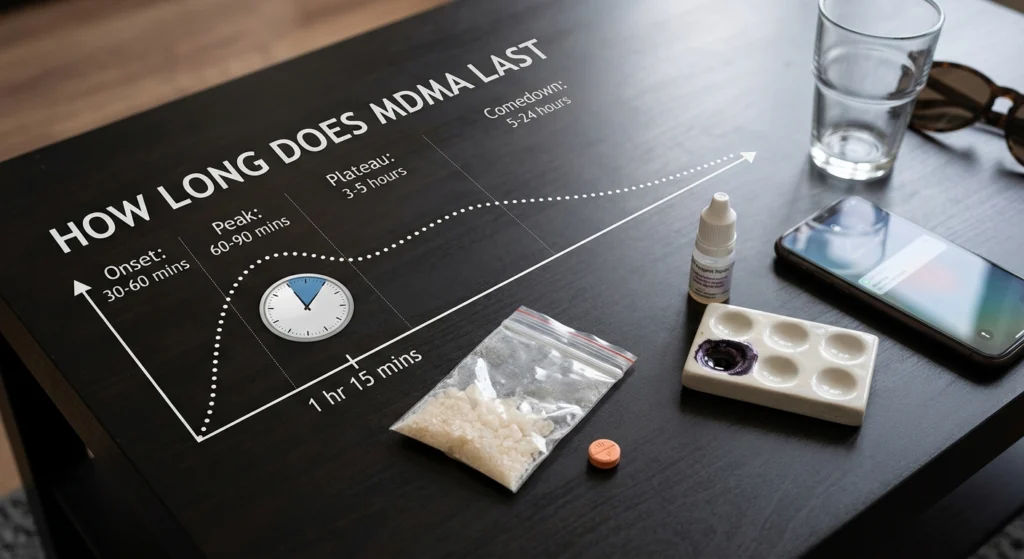

MDMA typically lasts 3 to 5 hours from the point when effects begin. Onset starts 30 to 60 minutes after taking it, the peak hits around 60 to 90 minutes in, and the main effects taper off within 4 to 5 hours. A comedown period lasting several additional hours commonly follows, and some people feel residual effects into the next day.
What Is MDMA
MDMA (3,4-methylenedioxymethamphetamine) is a synthetic substance that releases serotonin, dopamine, and norepinephrine in large amounts. It is sold in powder or crystal form under the name Molly, and as pressed pills called Ecstasy. Both refer to the same compound, though pill forms are more often adulterated with other substances.
Purity varies considerably between sources. Verifying that you have lab-tested MDMA before use is one of the most reliable ways to predict how long the effects will last and avoid unexpected duration changes from adulterants.
The MDMA Experience: Stage by Stage
Onset: 30 to 60 Minutes
After swallowing MDMA, the body takes 30 to 60 minutes to absorb it into the bloodstream. Some people notice first alerts such as a mild warmth, slight nausea, or restlessness before the full effects arrive. On an empty stomach this can happen faster; after a heavy meal it can take closer to 90 minutes.
Peak: 60 to 90 Minutes In
The peak typically arrives 60 to 90 minutes after ingestion. This is the most intense phase and usually includes heightened emotional warmth, increased sociability, sensory enhancement, and elevated energy. For most people the peak phase lasts around 2 to 3 hours before gradually softening.
Plateau: 3 to 5 Hours
After the peak, effects settle into a plateau where feelings of openness and talkativeness continue but with less intensity. This phase blends into the comedown as the serotonin released during the peak begins to deplete. Total active effect time from first onset to the end of the plateau is generally 3 to 5 hours.
Comedown: Hours 5 to 24
The comedown follows the plateau and can involve fatigue, low mood, reduced motivation, and difficulty sleeping. For most people this lasts several hours. In some cases, particularly after higher doses or a first experience, a flat or low mood can persist into the next day or two. This is linked to the temporary depletion of serotonin.
What Affects How Long MDMA Lasts
Duration is not fixed. Several variables push the timeline shorter or longer:
● Dose: Higher doses extend the plateau and intensify the comedown. They do not necessarily make the peak feel better, just longer and harder to recover from.
● Purity: Impure or adulterated pills can produce unpredictable timelines, sometimes shorter initially but with harsher after-effects. This is one of the main reasons how to take MDMA starts with testing what you have before anything else.
● Form: Crystal or powder MDMA tends to have a faster onset than pressed pills because it dissolves more quickly. Snorted powder acts faster but the duration is typically shorter.
● Body weight and metabolism: People with faster metabolisms process MDMA more quickly. Body weight influences how a given dose is distributed in the body.
● Empty vs. full stomach: Taking MDMA on an empty stomach speeds up absorption. A full stomach delays onset but does not meaningfully extend the overall duration.
● Tolerance and frequency of use: Regular use builds tolerance quickly. With repeated use, the same dose feels shorter and weaker, which leads some people to redose more heavily.
Does Redosing Extend the Duration
Yes, but with trade-offs. Taking a second dose during the plateau extends active effects by roughly 1 to 2 hours. However, redosing also increases the intensity of the comedown and the duration of after-effects the following day. Many people who redose report that the extra time felt during the experience is outweighed by how much worse they feel in the 24 to 48 hours that follow.
If redosing, keeping it to half the original amount or less is the general harm reduction guidance. Stacking full doses significantly increases cardiovascular and serotonin-related risks.
How Long Does MDMA Stay in Your System
The felt experience and the detection window are two different things. MDMA clears from the bloodstream as a felt effect within hours, but traces remain detectable in the body for much longer:
● Urine: Detectable for 1 to 3 days after use, though sensitive tests can pick it up for slightly longer.
● Blood: Detectable for 1 to 2 days after use.
● Saliva: Detectable for 1 to 2 days. Roadside saliva tests commonly used by law enforcement fall in this window.
● Hair: Detectable for up to 90 days. Hair testing is less common but used in forensic and long-term use investigations.
These windows vary based on dose, metabolism, urine pH, and frequency of use. Occasional users clear it faster than regular users.
What to Expect the Day After
The day following MDMA use is commonly marked by fatigue, low mood, and difficulty focusing. This is a result of serotonin depletion and is a normal part of the substance’s effect profile rather than a sign of permanent damage from a single use. Sleep quality the night of use is usually poor because of the stimulant effect, which compounds next-day tiredness.
The more MDMA is used and the shorter the gaps between sessions, the more pronounced these after-effects tend to become. Allowing adequate time between uses is one of the most consistent harm reduction points across all guidance on this topic.
How Long Does MDA Last Compared to MDMA
MDA (methylenedioxyamphetamine) is a related compound that produces a longer experience than MDMA, typically 6 to 8 hours with some effects extending to 10 hours. It has a stronger stimulant character and a more pronounced visual quality compared to the empathogenic focus of MDMA.
Both fall within the pharma category that includes ketamine, 2C-B, and similar compounds. Their effect profiles and durations differ meaningfully, so understanding the distinction before choosing one matters.
MDMA in Canada
MDMA is a controlled substance in Canada under the Controlled Drugs and Substances Act. Canadians looking to buy lsd online or source other psychedelic compounds will typically find MDMA and ecstasy available in the same catalogue from online dispensaries that ship via Xpresspost.
Frequently Asked Questions
How Long Does MDA High Last?
MDA typically lasts 6 to 8 hours, with some effects extending closer to 10 hours. It generally lasts longer than MDMA.
What Is the Love Pill Drug?
MDMA is commonly called the “love pill” because it can produce feelings of emotional warmth, empathy, and closeness.
How Long After MDMA Can You Drive?
It is safest to avoid driving until you are fully recovered and unimpaired. For some people, this may mean waiting 12 to 24 hours or longer after taking MDMA.
Is MDMA a Hard or Soft Drug?
MDMA is sometimes described as a “soft drug” in certain harm-reduction frameworks, but this is not a formal medical classification. MDMA can cause serious health risks and is controlled in many countries.
How Quickly Does Molly Leave Your System?
The main effects of MDMA generally wear off within several hours, but the drug can remain detectable in the body longer. Urine tests may detect MDMA for around 1 to 3 days after use.