🔥 SPEND $500+ USE CODE “BLC15” AT CHECKOUT TO SAVE 15%!
We have ZERO Affiliation with buylsdcanada.com (Buyers Beware)
 by
BuyLSDCanada
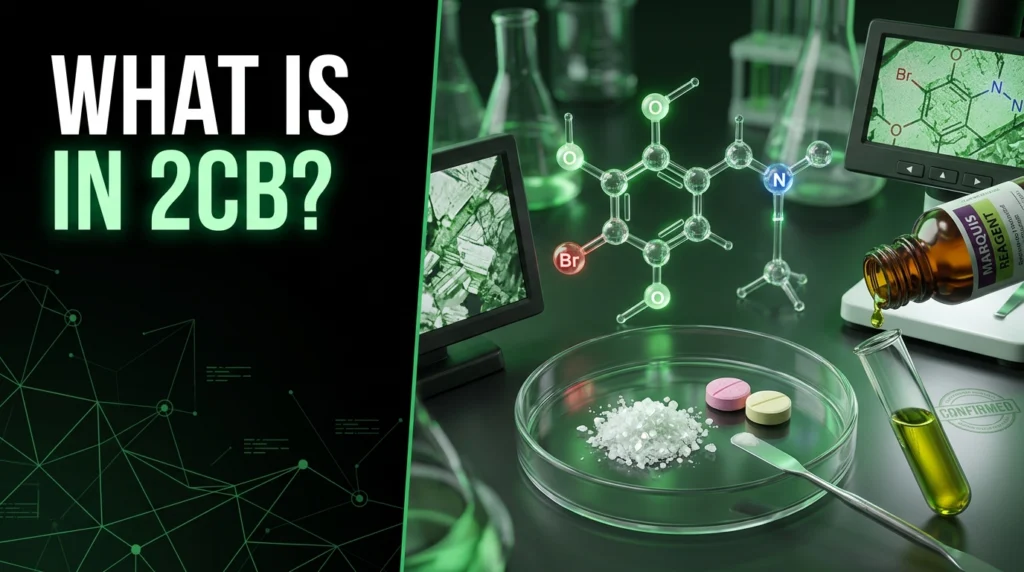
2CB is a synthetic psychedelic compound built on a phenethylamine core with two methoxy groups and a bromine atom attached to a benzene ring. Its full chemical name is 4-bromo-2,5-dimethoxyphenethylamine, and its molecular formula is C₁₀H₁₄BrNO₂. It belongs to the 2C family of psychedelic phenethylamines, first synthesized by chemist Alexander Shulgin in 1974.
2C-B is built on the phenethylamine backbone, the same foundational structure shared by mescaline and MDMA. Three substitutions on its benzene ring define the compound:
Bromine at position 4: This halogen substitution is the defining feature of the 2C-B molecule and the primary driver of its psychedelic potency.
Methoxy groups at positions 2 and 5: These oxygen-containing groups modify how the molecule interacts with brain receptors, influencing both effect intensity and duration.
The molar mass is approximately 260.13 g/mol. This structure determines how 2C-B binds to the 5-HT2A serotonin receptor, the same target shared by psilocybin and LSD products.
2C-B was first synthesized in 1974 by Alexander Shulgin while exploring structural variations of 2,5-dimethoxy-4-bromoamphetamine. He documented the compound in his 1991 book PiHKAL and considered it among his most significant discoveries.
The compound is entirely synthetic. It does not occur naturally in any plant or fungus. Unlike BuyLSDCanada’s magic mushrooms, which come from a biological source, 2C-B requires laboratory synthesis from controlled precursor chemicals.
In the 1980s and early 1990s, 2C-B was sold commercially under brand names including Nexus and Erox as a legal alternative to MDMA. The US DEA scheduled it in 1995, and the UN added it to Schedule II of the Convention on Psychotropic Substances in 2001.
2C-B is most commonly encountered as powder or pressed tablets.
Powder: Pure 2C-B hydrochloride appears as a white crystalline powder. The hydrochloride salt form is the most common preparation.
Tablets and capsules: Pressed pills typically contain 5mg to 25mg per tablet. Because tablets are unregulated, the actual dose can vary significantly from what is labeled.
The compound can appear white, pink, or off-white depending on purity and adulterants present. Genuine 2C-B turns yellow-green to green with Marquis reagent, which distinguishes it from MDMA and related phenethylamines. This is why sourcing from a supplier that publishes lab results matters. BuyLSDCanada’s 2C-B is listed with verified potency and compound identity.
2C-B is classified pharmacologically as a serotonergic psychedelic. Its primary mechanism is agonism at the 5-HT2A serotonin receptor, which drives its perceptual and cognitive effects.
At lower doses, 2C-B produces stimulant and entactogen-like effects with heightened sensory perception and mood elevation. At higher doses, the effects shift toward visual and hallucinogenic experiences. The experience is generally shorter and less cognitively intense than LSD tabs or psilocybin mushrooms at equivalent doses.
Oral effects onset within 45 to 75 minutes and last approximately 3 to 5 hours. The predictable, shorter duration is one reason 2C-B is considered more titratable than longer-acting psychedelics.
2C-B shares structural overlap with mescaline and MDMA, which is what led to its commercial use as an MDMA substitute in the 1980s. The pharmacological differences are significant:
vs. MDMA: MDMA floods the synapse with serotonin, dopamine, and norepinephrine. 2C-B does not produce this neurotransmitter dump and has a different safety and tolerance profile.
vs. LSD: LSD has a duration of 8 to 12 hours and produces more cognitive intensity at moderate doses. 2C-B is shorter, more sensory, and generally clearer-headed. Buyers choosing between them often review LSD collection alongside 2C-B listings to compare formats and doses.
vs. Psilocybin: Psilocybin produces longer, more introspective effects. 2C-B is more visually focused with a shorter timeline.
The 2C-B Canada science guide covers pharmacology, harm reduction, and compound comparisons in more depth.
Because 2C-B frequently appears in pressed tablet form without verified labeling, reagent testing is a standard harm reduction step:
Marquis reagent: Turns yellow-green to green. The primary confirmatory test for 2C-B.
Mecke reagent: Turns blue-green to blue.
Simon’s reagent: No reaction. Distinguishes 2C-B from secondary amines like MDMA, which turn blue.
Fentanyl test strips are worth using with any pressed pills from unverified channels, as fentanyl contamination in the grey-market supply chain is documented.
Is 2C-B legal in Canada?
No. 2C-B is a Schedule III controlled substance under the Controlled Drugs and Substances Act. Possession and distribution without authorization are criminal offences.
Does 2C-B show up on a drug test?
Standard drug panels do not test for 2C-B specifically. It does not trigger false positives for MDMA or amphetamines on most panels. Specialized forensic testing can detect it, but this is not used in routine workplace or clinical screening.
What psychedelic drugs are legal in Canada?
No classic psychedelics are fully legal in Canada for recreational use. Psilocybin has limited exemptions under Section 56 of the CDSA for therapeutic use. Grey-market platforms carry magic mushrooms, LSD, and MDMA for buyers who understand the legal context.
Is 2C-B neurotoxic?
Current research does not identify 2C-B as neurotoxic at typical doses. Unlike MDMA, which carries evidence of serotonergic neurotoxicity at high or repeated doses, 2C-B has not shown the same pattern in available studies. The compound remains less studied than LSD or psilocybin.
Is 2C-B similar to Molly?
Partially. Both share a phenethylamine backbone and produce some overlapping effects at lower doses. MDMA drives neurotransmitter release; 2C-B acts primarily as a receptor agonist. At higher doses, 2C-B becomes a full psychedelic experience that MDMA does not produce.
⑊



Is LSD Canada’s Next Cannabis? As cannabis legalization spreads across
Finding LSD for sale in Canada can feel like navigating
The Science Behind Psychedelics: How LSD and DMT Affect the
Get brand news, exclusive deals and updates straight to your inbox.
Your privacy matters. Privacy Policy